Monday Lunch Live
2 August 2026 (Video recording below)
Advancing equitable Lung Cancer Screening through implementation science, co-design and navigation support
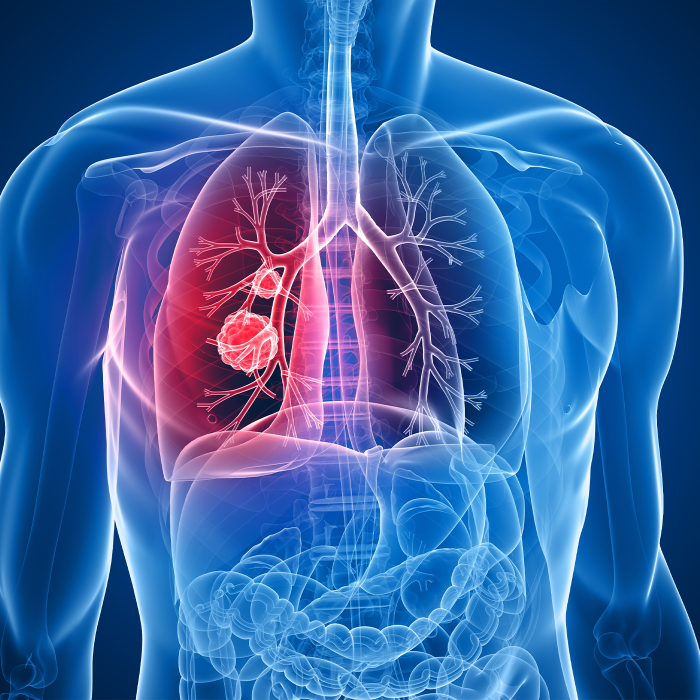
Lung cancer is the leading cause of cancer death in Australia. Screening with Low-Dose Computed Tomography (LDCT) can detect lung cancer at an earlier stage and reduce lung cancer mortality by up to 20%. The introduction of Australia's National Lung Cancer Screening Program (NLCSP) in July 2025 is a major milestone in cancer control. Ensuring the program reaches those who are most likely to benefit, however, will require implementation approaches that are evidence-informed, practical and responsive to the needs of diverse communities. Gain practical insights into participant-centred service design, stakeholder engagement, navigation models, and strategies to promote equitable access to screening.
This webinar explores how research is informing the implementation of the NLCSP, with a particular focus on supporting equitable participation among culturally and linguistically diverse communities.
Professor Nicole Rankin presents findings from a program of research designed to inform the rollout of the NLCSP. This includes results from a Discrete Choice Experiment involving 757 Australians eligible for lung cancer screening, which examined preferences for different types of screening support. The findings provide important insights into how the program can be delivered in ways that are acceptable, accessible and responsive to the needs of participants.
Ms Raya Lantin and Dr Lauren Gibson present the VCCC Alliance-funded Lung Cancer Screening Navigator Project. The project aims to address barriers to participation and improve access to screening for culturally and linguistically diverse communities. Attendees hear how a Participant Navigator model of care was developed through an extensive co-design and expert consensus process, resulting in nine core components considered both essential and feasible for implementation. The team shares the final model of care and discuss early experiences implementing the model within a Community Health Service in the North Western Melbourne Primary Health Network.
Chair
Dr Polly Dufton
Clinical Lead, Specialist Lung cancer Nurses, Lung Foundation Australia
Dr Polly Dufton is a clinician-researcher and currently holds the role of Clinical Lead for Specialist Lung Cancer Nurses at Lung Foundation Australia, with longstanding academic links to the University of Melbourne and previous leadership roles at Austin Health.
Her work focuses on how nursing can improve access to care, patient outcomes, and health system performance. She has led multi-site, grant-funded research and service improvement programs, with particular expertise in evaluating and implementing nurse-led models of care for people with cancer.
She is passionate about strengthening the visibility and impact of nursing through research, education, and service design. Her work centres on patient-centred care, co-design and interdisciplinary collaboration, and highlights the critical role nurses play in driving meaningful change across the cancer care pathway.
Speakers
Professor Nicole Rankin
Head, Evaluation and Implementation Science Unit, University of Melbourne
Prof Nicole Rankin is an implementation scientist, whose research focuses on the science of research translation, including how evidence can be more rapidly translated into clinical practice, and how to improve patient and health service outcomes. A major focus of her research is lung cancer; her research portfolio in this context extends from screening, early detection, and management through multidisciplinary care through to palliation and survivorship. Prof Rankin’s interests extend to other cancers and psychosocial aspects of disease management. Her expertise is applied across a portfolio of research projects, teaching and mentoring clinician-researchers in implementation science methodologies and leading communities of practice.
Ms Raya Lantin
Research Assistant, Evaluation and Implementation Science Unit, University of Melbourne
Ms Lantin is a research assistant with experience in qualitative research, evaluation and implementation science. She was awarded her Master of Public Health in 2024, where she specialised in Health Program Evaluation. Since graduating, her research has focused on lung cancer screening in Australia. Ms Lantin's interests are in health equity with a particular focus on culturally and linguistically diverse communities and people living with disability.
Dr Lauren Gibson
Research Fellow, Evaluation and Implementation Science Unit, University of Melbourne
Dr Gibson is an experienced health services researcher with a strong background in implementation science, qualitative and quantitative evaluation, and stakeholder engagement. She was awarded her PhD in 2023, which assessed barriers and facilitators to the implementation of chronic disease preventive care in community mental health services. Between 2022 and 2025 she conducted pragmatic, large-scale, mixed-methods evaluation projects of health and mental health programs as a researcher within a not-for-profit organisation. She is currently leading two funded projects to co-design and pilot lung cancer screening navigator models of care in regional and culturally and linguistically diverse communities. She is passionate about conducting research that can be translated into policy and practice to improve health outcomes for priority populations.


Resource details
This course is brought to you by